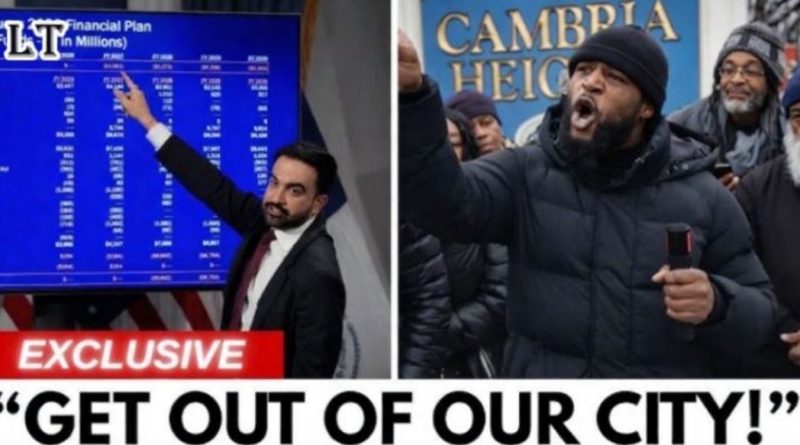
Furious Homeowners Push Back as New York City Unveils Shocking 9.5% Property Tax Hike
A rising wave of political backlash is building across New York City as Mayor Zohran Mamdani faces mounting criticism over a proposed property tax increase. What makes this moment particularly striking is that much of the pushback is coming not only from political opponents but from everyday homeowners—many of whom previously supported his campaign and embraced his promises of affordability and economic fairness.
At the center of the controversy is a proposed 9.5% property tax increase included in a $127 billion city budget designed to close a projected $5.4 billion deficit. City officials argue the measure is necessary to stabilize finances amid rising operational costs, economic uncertainty, and long-term fiscal obligations. However, for many residents—especially in boroughs like Queens—the proposal feels less like a financial solution and more like a direct threat to their ability to remain in their homes.
In neighborhoods such as Cambria Heights, the reaction has been immediate and deeply emotional. Homeowners, many from long-established Black and Brown communities, say the proposed increase could place enormous strain on already tight household budgets. For these families, homeownership represents decades of hard work and a path toward generational stability. The possibility that higher taxes could undermine that stability has sparked fear and frustration.
Critics argue that the proposal contradicts Mamdani’s campaign message. During his run for office, he positioned himself as a champion of working-class New Yorkers, pledging to ease financial burdens and improve affordability. Opponents now say the tax increase raises questions about whether those commitments are being compromised in the face of fiscal pressures.
Supporters of the mayor, however, emphasize the complexity of the city’s financial challenges. They argue that rising costs for public services, infrastructure maintenance, and essential programs leave limited options. From this perspective, the proposed increase is viewed as a difficult but necessary step to prevent deeper financial instability that could ultimately affect even more residents.
Still, for many homeowners, the numbers are hard to ignore. A 9.5% increase could mean thousands of dollars in additional annual costs. Combined with rising expenses for groceries, utilities, healthcare, and insurance, many families fear they are approaching a financial breaking point.
Community meetings across Queens have grown increasingly tense, with residents expressing concerns about being forced to cut essential spending, take on additional work, or even sell homes that have been in their families for generations. The fear of displacement echoes past experiences where economic pressures reshaped neighborhoods and pushed long-time residents out.
As the debate continues, the proposal has become more than a routine budget discussion. It has evolved into a broader conversation about affordability, trust, and the future of New York City. The outcome will not only shape the city’s financial direction but may also determine whether many families can continue to call New York home.