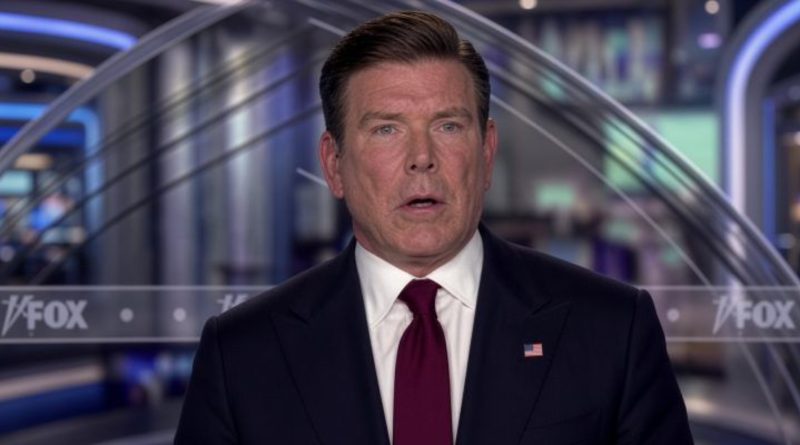
Emotional Fox News Host Stops Live Show “He Is Dead”…
President Donald Trump expressed strong optimism that the United States and Iran were within days of brokering an accord to extend an active ceasefire and restore commercial transit through the vital Strait of Hormuz, even as spillover fighting across the region threatened to disrupt the sensitive diplomatic channel.
In a telephone interview with ABC News, Trump characterized ongoing negotiations with Tehran as advancing rapidly despite a friction point involving renewed cross-border strikes between Israel and Hezbollah in southern Lebanon. The president indicated that a finalized bilateral framework-addressing both the formal continuation of the ceasefire and the lifting of maritime restrictions along the world’s most critical energy artery-could be concluded in roughly a week.
“Looking good, looking good,” Trump said of the diplomatic trajectory, while noting that a comprehensive pact had not yet been formally initialed. “We have a few more points to settle, but we’re getting what we need to get.”
Diplomatic Intervention Amid Regional Flares
The optimism unfolded against a volatile operational backdrop. According to administration officials, Iranian interlocutors raised alarm over escalating Israeli airstrikes against Hezbollah targets in Lebanon, warning that expanded military operations could imperil the broader ceasefire framework established with Washington.
Trump told ABC News that he intervened directly to preserve the diplomatic track, communicating across backchannels to halt active strikes.
“I spoke with Hezbollah, and I said no shooting, and I talked to Bibi [Benjamin Netanyahu], and said, no shooting, and they both stopped shooting each other,” Trump said.
The president framed the potential accord not merely as a cessation of hostilities, but as a strategic milestone that could fundamentally reshape Washington’s long-standing posture in the Middle East.
“A peace agreement with Iran could be even better than a military victory,” Trump said. Acknowledging the complex history separating the two nations, he added: “It’s not a simple thing. It’s a very big country, very proud, and there’s a long history of friction. So it’s not an easy thing for them, and it’s actually not easy from our standpoint either.”
The Strait of Hormuz as the Primary Pivot
At the center of the negotiations lies the Strait of Hormuz, the narrow maritime corridor connecting the Persian Gulf with the Gulf of Oman through which approximately one-fifth of global petroleum liquids flow.
The draft framework under discussion paired security concessions with economic off-ramps: Tehran would guarantee unmolested passage for commercial shipping and accept renewed international oversight of its nuclear facilities, while Washington would dismantle its forward naval interdiction cordon and grant relief from secondary sanctions hobbling Iranian oil exports.
Following the initial talks, Trump announced on June 14 that Washington and Tehran had reached a major pact aimed at keeping the waterway open and transitioning from an emergency two-week truce toward a permanent resolution. The breakthrough followed months of stalled indirect discussions, including an inconclusive summit hosted by Pakistani mediators in April.
Structural Obstacles and Fragile Gains
Despite the June announcement, subsequent developments highlighted the extreme fragility of converting a high-level political understanding into a durable geopolitical settlement.
By August, the agreement faced severe strain as disputes over inspection protocols and the timing of foreign asset releases surfaced. Commercial shipping through the corridor slowed dramatically as maritime underwriters reinstated war-risk premiums amid renewed proxy clashes. Tehran reasserted conditions regarding full sanctions relief, warning that commercial traffic would face scrutiny until underlying economic grievances were resolved.
By October, regional maritime tensions had surged back toward wartime baselines. A spate of tanker confrontations and naval shadow maneuvers prompted fresh warnings from Iranian commanders regarding unauthorized shipping corridors, cutting commercial vessel traffic to multi-month lows and jolting global benchmark crude markets.
The fluctuating trajectory underscores the persistent friction defining U.S.-Iran diplomacy. While high-level statements often point toward imminent breakthroughs, reconciling Washington’s demands for permanent nuclear containment with Tehran’s insistence on immediate economic normalization remains an arduous diplomatic challenge.
For both capitals, the core dilemma remains unchanged: whether high-level diplomacy can withstand the volatile actions of regional proxies long enough to codify a verifiable treaty, or whether renewed skirmishes will once again shut the door on de-escalation and close one of the global economy’s most indispensable transit corridors.