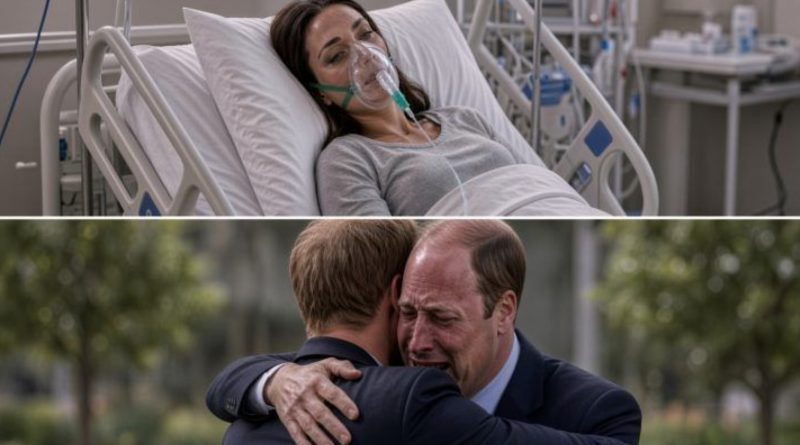
💔 SAD NEWS: Prince Harry Reportedly Mourns a Heartbreaking Loss — Details Remain Unclear… 🕊️😢
Behind the ceremonial pageantry, state banquets, and carefully managed public appearances of the British monarchy lies a domestic history shaped by bereavement, public divorce, intense media intrusion, and complex relationships that have remained strained across generations.
Recent reports detailing an emotional private conversation between King Charles III and his eldest son, Prince William, have focused renewed attention on the personal dynamics linking the reigning sovereign and his direct heir. While Buckingham Palace has maintained its traditional policy of silence regarding private family matters-prompting palace historians to treat unsourced accounts with caution-the interest underscores a central tension of modern royalty: Charles and William occupy positions where personal grief and institutional duty are inextricably intertwined.
One is the head of state; the other is the heir apparent. Their bond is simultaneously an intimate family relationship and the governing axis for the institutional future of the House of Windsor.
Formative Loss and Royal Duty
For Prince William, the central tragedy of his youth remains a matter of global public record.
When Diana, Princess of Wales, died in a Paris car crash in August 1997, William was 15 years old and his younger brother, Prince Harry, was 12. The enduring image of the two young princes walking behind their mother’s gun carriage through central London became an indelible milestone in modern British history. That moment encapsulated the severe expectations placed on senior royals: processing acute trauma under intense global scrutiny without displaying private fractures.
The tragedy followed years of tabloid scrutiny surrounding the collapse of Charles and Diana’s marriage, an acrimonious split that played out across international headlines and televised interviews.
As the brothers reached adulthood, their responses to that upbringing diverged sharply: William’s Path of Institutional Preservation: William embraced the palace hierarchy, assuming expanding state duties, moving into the direct line of succession as Prince of Wales, and reinforcing institutional stability. Harry’s Break and Transatlantic Distance: Harry stepped back from active royal duties alongside Meghan, Duchess of Sussex, in 2020, moving to California and airing grievances through broadcast interviews and his 2023 memoir, Spare.
The Dual Burden of the Heir Apparent
William’s role places unique pressures on his relationship with his father. As Prince of Wales, he must balance personal loyalty with the responsibility of safeguarding the long-term viability of the monarchy.
Royal analysts note that while official palace communiqués and state addresses are matters of public record, accounts of private conversations between senior royals frequently reflect competing factions within the court. Without direct attribution, reports of retrospective apologies or personal reckonings remain difficult to independently verify.
Nevertheless, the dynamic reflects a generational shift. As Charles navigates the later years of his reign, William is actively preparing to inherit the constitutional duties and the historical baggage of the modern throne. Reconciling those responsibilities requires managing an inherited institutional history whose demands took an undeniable toll on his family.
Harry’s Role in an Evolving Family Narrative
No assessment of the relationship between Charles and William can be separated from the transatlantic rift involving Prince Harry. While relations between William and Harry have remained deeply chilled, Charles’ relationship with his younger son has shown tentative signs of movement.
In July 2026, Charles held a private meeting with Harry, Meghan, and their children, Prince Archie and Princess Lilibet, at Highgrove-marking the first time the king had seen his grandchildren in person since 2022. The family gathering occurred amid lingering administrative disagreements concerning state-funded security arrangements and permanent residential quarters.
The reunion was followed by Harry and Meghan’s broader relocation back to Britain with their children later in 2026, where they have continued to live as private citizens rather than working royals. While the geographical return has created regular opportunities for informal contact between Charles and his younger son, it has not automatically dismantled the deeper institutional divisions separating Harry from his brother.
An Institution Balanced on Human Relationships
The ongoing fascination with the Windsor family underlines a basic truth of the British crown: it is an ancient constitutional entity sustained by ordinary human relationships.
There is no public record documenting the precise dialogue shared behind closed palace doors, nor does evidence suggest that a single exchange has fundamentally altered the family’s trajectory. Instead, observers suggest that progress is more likely to emerge incrementally-through unannounced private meetings, shared responsibilities, and gradual efforts to navigate the past without defensive posturing.
For Charles and William, the test remains structural and personal. As the king maintains the crown and William prepares for its eventual transfer, the enduring strength of the House of Windsor will depend not merely on formal statecraft, but on whether its principal figures can manage the complex family history that underpins the institution.