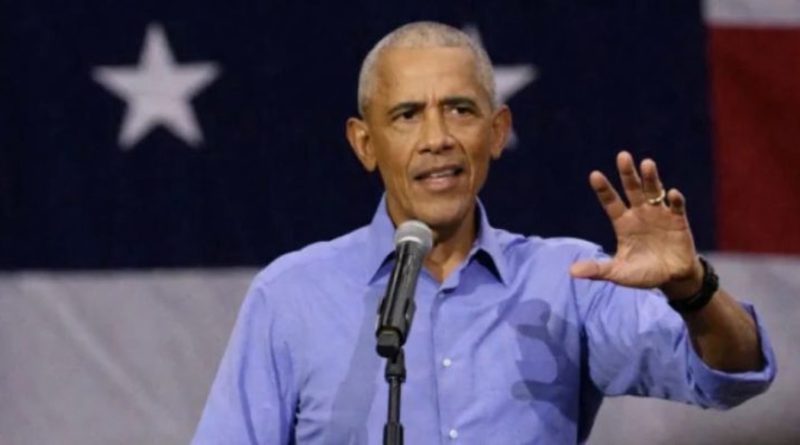
Trump, Hegseth Rip Obama For Gifting Iran with Cash, Weapons
President Donald Trump and Defense Secretary Pete Hegseth sharply criticized former President Barack Obama over the weekend, accusing his administration of providing Iran with large sums of cash that they argue helped strengthen Tehran’s military capabilities. Their remarks come as tensions in the Middle East remain elevated, with the United States and Israel continuing a sustained military campaign targeting Iran’s strategic infrastructure following claims that Tehran has resumed efforts related to nuclear weapons development.
Speaking at the FII PRIORITY Summit on Friday, Trump revisited one of his most consistent criticisms of the Obama administration — the 2015 nuclear agreement known as the Joint Comprehensive Plan of Action. Trump argued that the agreement allowed Iran to maintain elements of its nuclear program while also receiving financial relief that, he said, ultimately benefited the country’s military and regional influence.
Trump specifically pointed to the $1.7 billion payment made to Iran during the implementation of the agreement, describing it as a transfer of cash that empowered a hostile regime. He reiterated claims that the funds were delivered in cash via aircraft — a detail that previously generated political controversy and public debate. Trump framed the payment as an example of what he views as excessive executive authority, emphasizing that such actions demonstrated the broad powers held by the presidency. He also maintained that his administration’s decision to withdraw from the nuclear deal helped prevent Iran from moving closer to obtaining nuclear weapons.
The Obama administration, however, justified the payment as part of a legal settlement tied to a decades-old dispute. The funds were connected to a pre-1979 arms deal in which the United States had accepted payment from Iran for military equipment that was never delivered after the Iranian Revolution. U.S. officials at the time argued that resolving the case avoided additional penalties and settled a longstanding legal claim between the two countries.
Hegseth echoed Trump’s criticisms during a recent Cabinet meeting, accusing media outlets of minimizing what he described as the consequences of the Obama administration’s actions. He argued that the financial settlement contributed to Iran’s ability to fund military programs and expand regional activities, and he called for greater transparency in coverage of U.S. policy toward Iran.
Beyond financial concerns, Hegseth also raised alarms about Iran’s missile capabilities. He referenced a recent incident in which Iran reportedly launched two long-range missiles toward a distant target, suggesting the country’s technological reach may be broader than previously understood. Although the missiles did not strike their intended destination, the event heightened concerns among U.S. allies about the potential range and threat posed by Iran’s growing arsenal.
The renewed criticism highlights the continuing divide over U.S. policy toward Iran, with ongoing disagreements over diplomacy, military strategy, and the long-term consequences of past agreements continuing to shape the debate in Washington and among international partners.