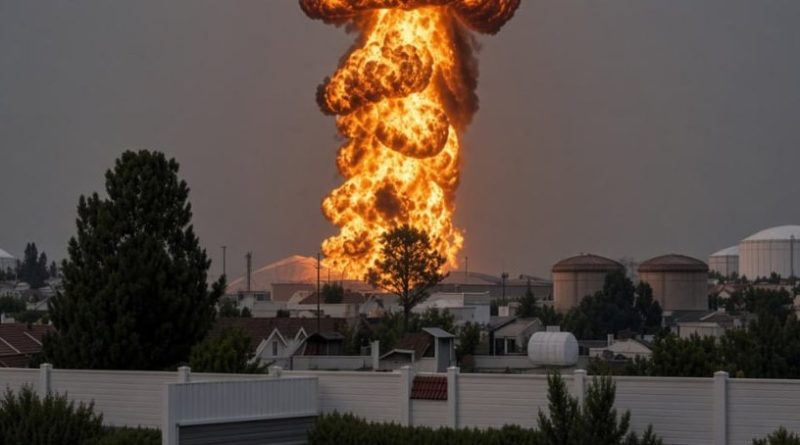
🚨4 countries join forces to atta…
Al Dhafra Air Base remains particularly significant because of its…
The Persian Gulf is once again on a war footing. Iran has launched successive waves of missiles and drones toward locations hosting U. S. military forces across the region, forcing Gulf allies to activate air defenses and issue emergency alerts to communities already bracing for further escalation. Al Dhafra Air Base remains particularly significant because
of its… This is no longer a contained confrontation. Iran’s repeated attacks against American military positions and regional partners have shown how quickly fighting can spread across the Gulf. U. S. forces maintain a major strategic presence in Bahrain, Qatar, Kuwait, and the United Arab Emirates, placing those installations among the most exposed targets whenever
Tehran chooses to escalate. Multiple rounds of Iranian strikes against U. S. bases and assets have been reported throughout the conflict. In the United Arab Emirates, explosions and incoming threats have put security forces on high alert. UAE air defenses have previously intercepted Iranian missiles and drones, while Iranian forces have claimed attacks against facilities
associated with U. S. operations.
damage from any individual barrage, however, must be treated carefully…
Al Dhafra Air Base remains particularly significant because of its connection to American military operations in the region. Earlier Iranian strikes have targeted American-associated infrastructure in the UAE, demonstrating that even major Gulf installations can come under direct pressure. Claims of specific damage from any individual barrage, however, must be treated carefully until authorities complete
assessments and independent evidence is available. Bahrain hosts one of the most strategically important American military locations in the Gulf: Naval Support Activity Bahrain, headquarters of the U. S. Navy’s Fifth Fleet. The kingdom is a critical node in Washington’s regional network. Iranian forces have repeatedly claimed attacks against U. S. -linked facilities there, including
areas near Sheikh Isa, while Bahraini authorities have reported intercepting incoming threats during previous barrages. Damage assessments and official statements have varied over the course of the conflict, with some reports describing significant impacts on logistics infrastructure. Qatar has faced the same danger. Al Udeid Air Base is one of the most important U. S.
military installations in the region. Iranian
And then there is the Strait of Hormuz. The narrow…
forces have repeatedly targeted or threatened American assets there… Iranian forces have repeatedly targeted or threatened American assets there… Iranian forces have repeatedly targeted or threatened American assets there, and satellite imagery and subsequent reporting have documented damage to portions of U. S. infrastructure at the base from earlier attacks. Qatari air defenses have intercepted
incoming threats, and some U. S. personnel movements have been… incoming threats, and some U. S. personnel movements have been reported amid heightened tensions. And then there is the Strait of Hormuz. The narrow… targeted locations supporting U. S. forces, including Ali Al Salem Air Base, with Kuwaiti air defenses engaging incoming threats. Several exchanges
have produced injuries among U. S. personnel and damage to equipment, according to reporting, even as interceptions have limited the full effect of some salvos. The pattern is clear: American military infrastructure across the Gulf remains exposed to Iranian missile and drone attacks, while U. S. allies are forced to defend their territory against strikes
connected to a conflict they did not initiate. Air defenses have intercepted large numbers of incoming threats over the course of the fighting, yet the scale and persistence of Iranian launches continue to strain
Kuwait has likewise been directly exposed. Iranian missiles and drones have previously
systems and raise the risk of further hits. And then there is the Strait of Hormuz. The narrow waterway is one of the world’s most important energy chokepoints. Continued fighting around the Gulf threatens commercial shipping, energy exports, and already-fragile global markets. far below normal levels, vessels delayed or waiting outside the strait, and repeated
attacks on commercial ships reported. Iran has asserted control over transit lanes, while U. S. naval forces have sought to facilitate passages. Every additional missile launch, drone attack, or naval confrontation raises the possibility of another shock to global energy supplies. The message from the battlefield is increasingly clear: the conflict is not staying inside
Iran. Tehran has demonstrated its willingness and ability to strike U. S. -linked targets across the Gulf, while Washington continues to maintain significant military forces throughout the region. The result is a volatile confrontation in which one additional attack could trigger another cycle of retaliation. For American forces and U. S. allies, the immediate priority
remains… For American forces and U. S. allies, the immediate priority remains… For American forces and U.
The conflict has severely disrupted shipping through the region, with traffic falling
S. allies, the immediate priority remains defense, interception, and damage assessment. For the rest of the world, the larger question is whether the next major escalation pushes the region into territory that becomes even harder to control. The Persian Gulf is already under enormous pressure.