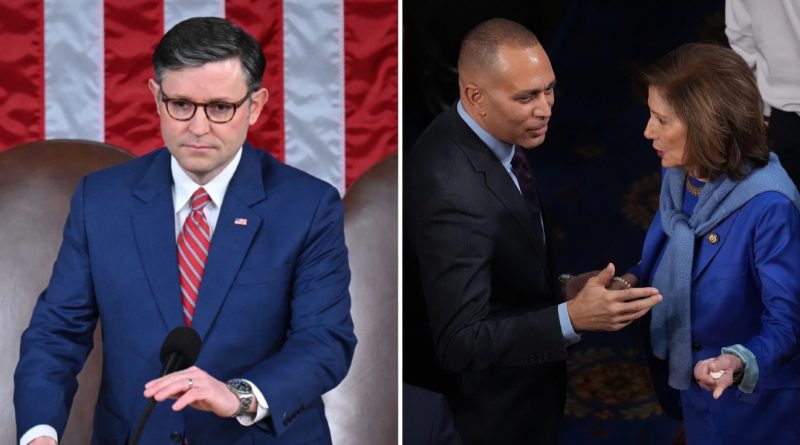
House Passes Bill Reversing Biden’s Catastrophic Natural Gas Ban
Mike Johnson announced a major legislative development after the Republican-controlled U.S. House of Representatives passed the Unlocking Our Domestic LNG Potential Act of 2025, a bill aimed at reversing policies implemented during the administration of Joe Biden regarding liquefied natural gas exports.
Johnson framed the legislation as part of a broader energy strategy aligned with Donald Trump and congressional Republicans. In a statement, Johnson said the bill would help expand domestic energy production, lower costs for consumers, and strengthen U.S. energy independence.
“President Trump and Congressional Republicans are working together to unleash reliable American energy to lower costs for families, support American workers and energy producers, and ensure America is never again held hostage by radical climate bureaucrats and activists,” Johnson said.
Johnson also criticized the previous administration’s policies, calling restrictions on natural gas exports among the most damaging energy decisions in recent years. He argued that limiting exports harmed American workers, producers, consumers, and international allies who rely on U.S. energy supplies.
According to Johnson, the legislation is designed to prevent future export restrictions, streamline the permitting process, and reduce what Republicans describe as political interference in energy development. The measure also seeks to codify several executive actions issued by Trump since returning to office in 2025, part of a broader Republican push for what they call “energy dominance.”
Brett Guthrie, chairman of the House committee involved in advancing the legislation, said expanding domestic energy production would strengthen the nation’s power grid and lower costs for families. Guthrie also highlighted related legislation, including the REFINER Act, which he said would improve refinery utilization and boost production of oil, gas, and other critical energy resources.
August Pfluger, who sponsored the LNG legislation, described the House vote as a major step toward expanding American energy infrastructure. He said the bill would reform what he characterized as a politically driven approval process and streamline permits for LNG exports.
Supporters argue that increasing LNG exports would strengthen the U.S. economy, stabilize energy prices, and enhance energy security for American allies abroad. According to background information released by Johnson’s office, the bill would shift primary approval authority for LNG exports from the U.S. Department of Energy to the Federal Energy Regulatory Commission, a move supporters say would depoliticize the process.
Separately, Johnson announced that the House will hold hearings examining rising violence against law enforcement. The announcement follows a recent shooting involving two National Guard members deployed to Washington, D.C. as part of a federal anti-crime initiative.
Sarah Beckstrom died from her injuries, while Andrew Wolfe remains hospitalized in serious but improving condition. The hearings will also examine other recent incidents, including a deadly shooting at an Immigration and Customs Enforcement facility in the Dallas area earlier this year.
An Federal Bureau of Investigation report previously found assaults on law enforcement officers reached a 10-year high in 2023, with more than 79,000 incidents reported nationwide. The issue continues to fuel debate in Washington over crime policy, immigration enforcement, and the use of federal personnel to support public safety efforts.