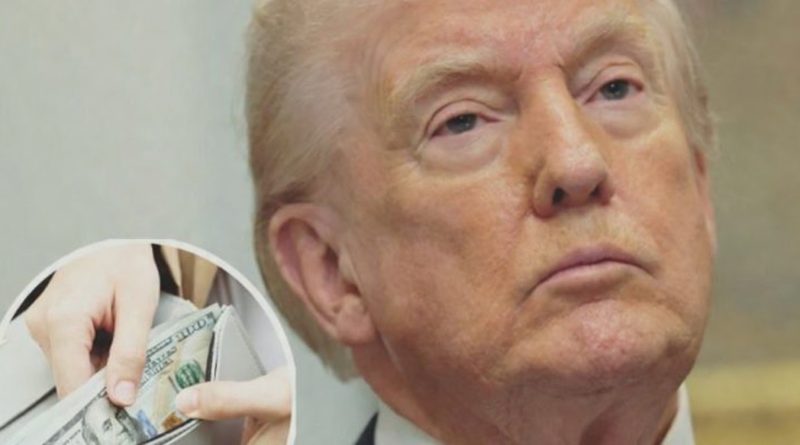
“Americans May Get $1,745 Following Donald Trump’s Recent Announcement”
For months, Americans have heard speculation about a potential payment of roughly $1,745 per family tied to tariff policies introduced by Donald Trump. However, it remains unclear whether any such money will ultimately reach households, as legal and administrative questions continue to complicate the proposal.
The concept behind the potential payout stems from Trump’s emphasis on tariffs as a central part of his economic strategy. He has repeatedly suggested that if tariffs led to higher consumer costs, those increases could potentially be offset by direct payments to Americans. Early discussions framed the idea as a type of “dividend,” similar to stimulus-style checks Trump previously referenced, where revenue generated from tariffs would be redistributed back to the public.
However, that approach encountered a major legal obstacle in February 2026, when the Supreme Court of the United States ruled that certain tariffs imposed under emergency powers were not authorized by law. The decision focused on the International Emergency Economic Powers Act (IEEPA), concluding that it does not grant the president unilateral authority to impose broad tariffs. As a result, key tariffs introduced in 2025 were overturned, weakening the foundation for using tariff revenue to fund direct payments.
With the original dividend concept now in doubt, policymakers have shifted toward discussing a potential refund instead. Under this idea, Americans would effectively receive compensation for higher costs linked to tariffs, rather than a direct share of tariff revenue. A report from Democratic members of the Joint Economic Committee estimated that U.S. consumers paid approximately $231 billion in tariff-related costs between February 2025 and January 2026—an amount they calculated to be about $1,745 per household.
Some Democratic leaders, including Gavin Newsom and J. B. Pritzker, have called for returning that money to families. In addition, several Senate Democrats have proposed legislation known as the Tariff Refund Act of 2026, which would require the federal government to refund tariff revenues—with interest—within a specified timeframe. Supporters argue that since many businesses passed tariff costs on to consumers, households should receive relief from the resulting higher prices.
Still, administration officials and some policymakers caution that direct payments remain unlikely in the near term. The United States Department of the Treasury has indicated that major legal and logistical hurdles remain before any refunds could be issued. In addition, early plans for an online refund portal—expected to launch in spring 2026—may initially be unable to process a significant portion of requests, potentially delaying implementation.
Another complication is determining who would actually receive refunds. Tariffs are typically paid directly by importers, not consumers, even though businesses often pass those costs along through higher prices. Legal distinctions between finalized and unfinalized tariff collections could also determine eligibility, making it difficult to distribute funds fairly.
Trump has suggested that potential payments could begin around mid-2026, but that timeline remains speculative. Legal rulings, congressional action, and administrative planning must all align before any payments could be authorized.
For now, the idea of a $1,745 tariff-related payment remains uncertain. As courts, lawmakers, and federal agencies continue debating the issue, Americans are left waiting for clarity on whether the proposal will materialize—or remain another unresolved policy discussion tied to broader debates over trade, inflation, and executive authority.