⬇️Fox Host Sounds Alarm as NASA Scientists Continue to Turn Up Missing or Dead
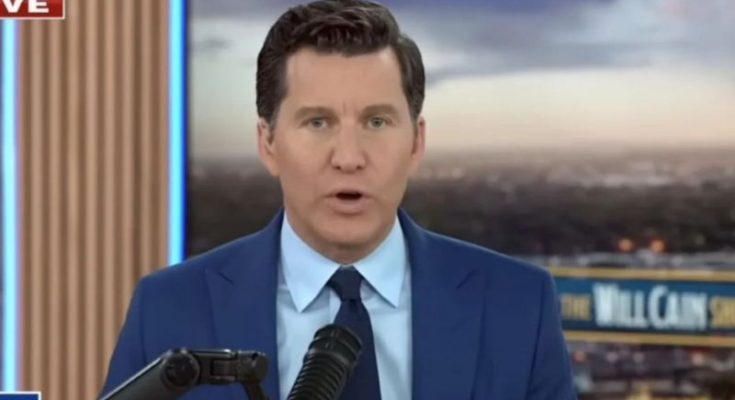
Fox News host Will Cain recently raised concerns about a series of deaths and disappearances involving seven scientists and individuals tied to sensitive government research. During a segment on The Will Cain Show, Cain pointed to what he described as an “overlap” among the cases and suggested the pattern should prompt closer attention.
“There’s a story that caught our attention,” Cain said in a clip shared on X. “We’re talking about a number of U.S. scientists — some connected to very sensitive research — who have died or disappeared. Let’s break down what we know so far.”
Standing beside a screen displaying photos of those involved, Cain began with Carl Grillmair. Grillmair, an astrophysicist at California Institute of Technology, worked on a NASA-supported space telescope project involving infrared systems. According to Cain, Grillmair was shot and killed at his home about two months ago.
Cain then referenced Frank Maiwald, a senior scientist at NASA Jet Propulsion Laboratory who focused on advanced satellite systems. Maiwald died nearly two years ago, but Cain noted that the cause of death has not been publicly disclosed.
The segment then shifted to four individuals who have reportedly gone missing. Cain first mentioned Monica Reza, who was said to have ties to a Jet Propulsion Laboratory project and disappeared last summer while hiking in California. No trace has reportedly been found.
Cain next cited William McCasland, a retired Air Force general and former head of the Air Force Research Laboratory. McCasland oversaw advanced space and surveillance programs and has reportedly been missing since February. Cain also noted reports that McCasland once oversaw funding connected to a project that allegedly involved Reza.
Two additional missing individuals were linked to Los Alamos National Laboratory. Cain identified Melissa Casias, who disappeared last summer. Although Casias held an administrative role, she reportedly had security clearances, which Cain suggested could make her a potential target.
He also referenced Anthony Chavez, an engineer connected to Los Alamos who reportedly vanished during a walk, with no clear signs explaining his disappearance.
Cain’s discussion drew in part from reporting by the Daily Mail, which focused on Casias. Former Federal Bureau of Investigation Assistant Director Chris Swecker suggested that individuals with high-level access at classified facilities could be attractive targets for kidnapping, noting that administrative staff may still possess valuable knowledge.
Finally, Cain mentioned Nuno Loureiro, a researcher at Massachusetts Institute of Technology focused on nuclear fusion. Loureiro was reportedly shot and killed in his Massachusetts home last December. Cain noted that the case appeared separate, with no confirmed links to the others.
Cain concluded by emphasizing that authorities have not publicly connected any of the seven cases but suggested the shared ties to institutions such as NASA, Air Force research programs, and Los Alamos raised questions.
“But here’s the key point,” Cain said. “Authorities have not connected these cases. But look at the overlap — the same handful of institutions: NASA, Air Force Research, Los Alamos Laboratory. So could they be connected? Or is this something else entirely?”