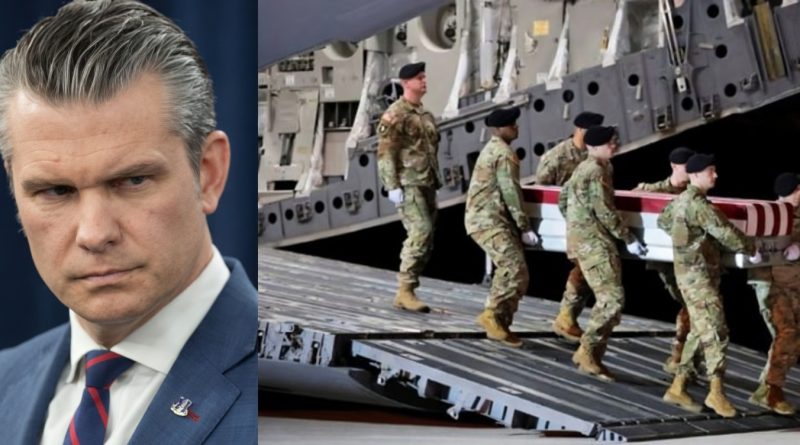
BREAKING: Survivors of the missile attack that killed 6 Americans say Hegseth is LYING – it wasn’t a lucky shot, they were completely unprepared to defend themselves thanks to Trump’s incompetence!
CBS News reports that survivors of an attack on a U.S. base in Kuwait — an incident that left six American service members dead and more than twenty injured — are challenging statements made by Defense Secretary Pete Hegseth about how the strike unfolded.
According to the report, one injured service member disputed the description that a missile simply “squeaked” through defensive systems, calling that characterization inaccurate. The individual said the unit was not sufficiently prepared or properly equipped to respond to the attack, adding that the position lacked hardened infrastructure capable of withstanding aerial threats.
The service member also stated that personnel had been deployed closer to Iran into what they described as a highly vulnerable area previously identified as a potential target. According to the account, the decision to position troops there was made without adequate explanation or visible improvements to defensive measures.
CBS reported that the survivor described limited protective infrastructure, consisting largely of vertical blast barriers that offered minimal protection against overhead strikes. The service member characterized the overall defenses as inadequate, noting what they described as an absence of effective drone defense capability and limited structural protection.
In contrast, statements attributed to Defense Department officials maintained that appropriate precautions had been taken to protect personnel. Officials asserted that the installation included reinforced protective structures, including six-foot walls, and that defensive measures were in place to mitigate risks from missile or drone attacks.
These differing accounts have fueled broader questions about the preparedness of forward-deployed U.S. forces and the adequacy of defensive infrastructure in high-risk regions. The incident is expected to undergo further scrutiny as additional information emerges through military reviews and independent reporting.
At present, there is no publicly verified independent assessment confirming the precise sequence of events during the attack or the effectiveness of the defensive systems in operation at the time. Military analysts note that investigations of this nature typically involve after-action reviews examining intelligence warnings, command decisions, and on-site defensive readiness. Such reviews can take weeks or even months to complete, particularly when classified information is involved.
Until those findings are released or summarized by official sources, the public record remains based on partial and sometimes conflicting accounts. Additional context may emerge as congressional oversight committees request briefings and review classified operational reports related to the incident, a process that could influence future deployment planning and force protection strategies in high-risk areas.