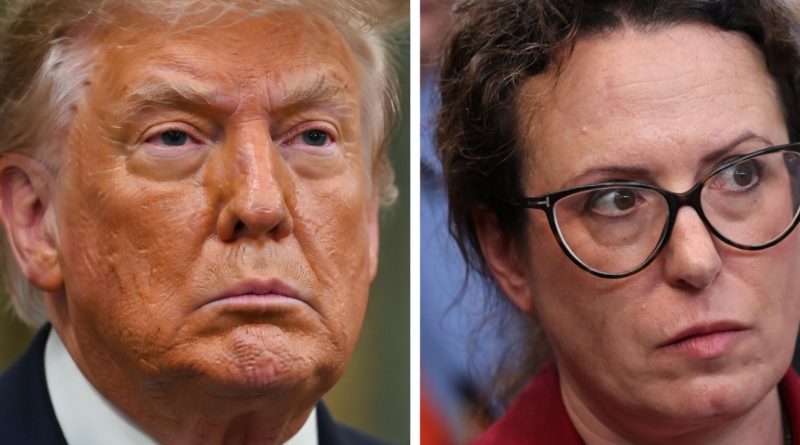
“Donald Trump Calls White House Reporter a Surprising Nickname, Suggests Possible Legal Steps.”
Donald J. Trump has once again spotlighted his long-running and often contentious relationship with the media, this time directing criticism at Maggie Haberman. On March 6, 2026, Trump used Truth Social to post sharply worded remarks about Haberman, including derogatory language and suggestions she could be tied to a Florida-related lawsuit involving The New York Times. Notably, he did not reference any specific article or factual dispute, leaving observers to interpret the context of his criticism.
This approach reflects a broader pattern in Trump’s engagement with the press. Over the past decade, he has frequently criticized journalists and major outlets—such as CNN and The Washington Post—often framing them as biased without directly addressing specific reporting. Haberman, a Pulitzer Prize-winning journalist, has been a central figure in political reporting, known for her detailed coverage of Trump’s career, presidency, and decision-making processes.
In 2022, Haberman published Confidence Man: The Making of Donald Trump and the Breaking of America, a comprehensive account of Trump’s life and leadership. Despite occasionally granting her interviews, Trump has repeatedly criticized her work and questioned her objectivity. At times, he has also raised the possibility of legal action against journalists, though such cases rarely advance far in court due to strict U.S. defamation standards.
Analysts note that Trump’s confrontational rhetoric serves strategic purposes: reinforcing his direct communication style and shaping how his audience perceives the media. By bypassing traditional channels, he can influence public opinion while casting unfavorable coverage as part of a hostile press environment. This dynamic highlights an enduring tension between political messaging and journalistic inquiry, a defining feature of modern democratic discourse.