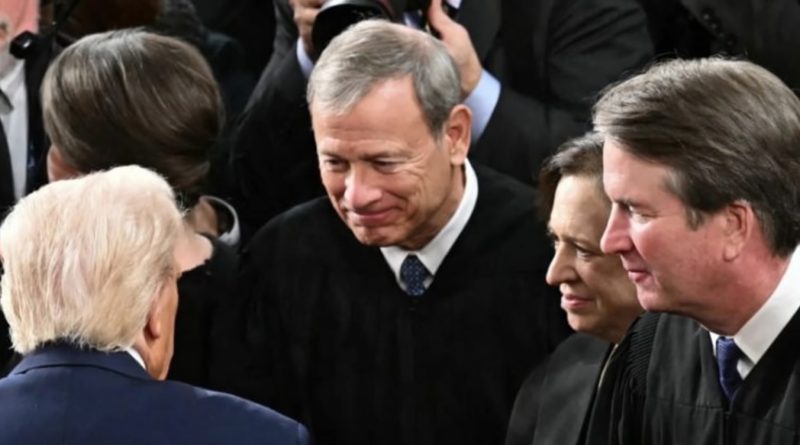
Justice Samuel Alito broke from the rest of the Supreme Court of the United States on Wednesday, issuing the lone dissent in a major
In an 8–1 ruling, the Supreme Court of the United States determined that federal law does not permit a term of supervised release to be automatically extended simply because a defendant absconds. The majority opinion was written by Neil Gorsuch and joined by both conservative and liberal justices, creating a rare moment of broad agreement across ideological lines, according to Newsweek.
At the heart of the case was whether courts may “toll,” or pause, a supervised-release period when a defendant disappears and avoids authorities. The Court rejected that interpretation, overturning a ruling from the U.S. Court of Appeals for the Ninth Circuit, which had allowed prosecutors to treat crimes committed years later as violations of an extended supervision period.
Writing for the majority, Gorsuch stated that the Ninth Circuit’s approach effectively lengthened supervised release beyond what a sentencing judge had originally ordered. He emphasized that federal law does not grant courts the authority to expand supervision in that manner, reinforcing limits on judicial power.
The ruling resolves a long-standing split among federal appeals courts. Some circuits had permitted “fugitive tolling,” allowing supervised release to pause when a defendant fled, while others rejected the practice. By siding with the narrower interpretation, the Supreme Court set a nationwide standard limiting how far judges can go in holding defendants accountable after their supervision expires.
The case involved Isabel Rico, who was sentenced in 2010 to seven years in prison on federal drug trafficking charges. After violating supervised release in 2017, she received an additional 42-month term. Rico later disappeared, leading to an arrest warrant in 2018. She was not located until 2023, after being arrested and convicted on new state drug-related charges in 2022.
Federal prosecutors treated those later offenses as violations of her supervised release. Rico challenged the decision, arguing her supervision had already expired and could not be extended simply because she had absconded. The Supreme Court agreed, concluding that the Sentencing Reform Act does not authorize courts to pause or extend supervision under those circumstances.
Samuel Alito issued the lone dissent. He argued the majority removed a practical tool for judges dealing with defendants who evade supervision. Alito questioned how someone could be considered under supervised release while actively avoiding it and warned that the decision could weaken accountability.
The ruling carries nationwide implications, limiting courts’ ability to treat post-expiration conduct as violations unless Congress provides explicit authority.