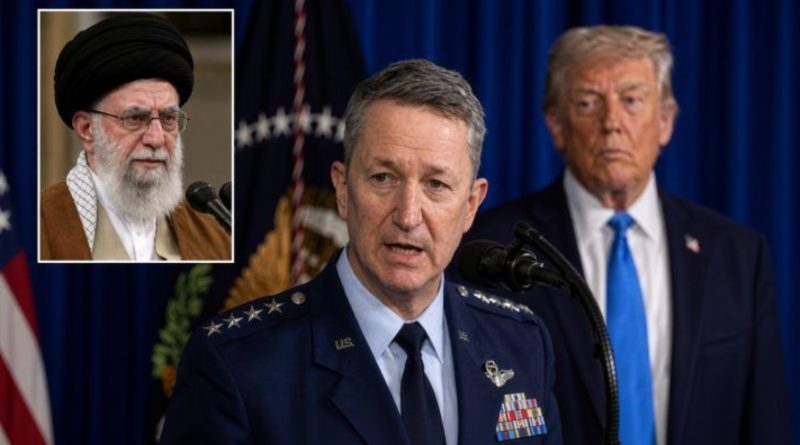
🚨 Allied fighters launch retaliatory strikes against Iranian-backed proxy infrastructure. 🌍✈️💥
WASHINGTON – In a sharp escalation across the Middle East, the Islamic Revolutionary Guard Corps (IRGC) launched a coordinated salvo of ballistic missiles targeting United States forward operating positions on Tuesday evening, prompting an immediate regional air-defense engagement followed hours later by joint U.S. and Saudi retaliatory airstrikes across eastern Iraq. The engagement commenced at approximately 5:45 p.m. Eastern Standard Time, when early-warning satellite constellations and ground-based radar arrays detected multiple ballistic vectors departing launch sites within western Iran. Allied integrated air and missile defense batteries-including forward-deployed Patriot PAC-3 units and naval Aegis interceptors-scrambled into firing status, successfully intercepting every inbound projectile before impact. U.S. Central Command (CENTCOM) confirmed the tactical sequence in a pair of synchronized operational releases.
The military command confirmed zero coalition casualties and zero facility damage from the ballistic barrage. Shortly thereafter, CENTCOM disclosed that American strike aircraft, operating in close tactical coordination with Royal Saudi Air Force fighter squadrons, had executed heavy retaliatory airstrikes targeting IRGC-directed logistics hubs, munitions depots, and unmanned aerial vehicle assembly sites scattered across eastern Iraq. The rapid counterstrike marks a significant operational turning point, underscoring the White House’s increasingly assertive rules of engagement: instantaneous tactical defense followed by immediate, proportional kinetic devastation of Iran’s proxy infrastructure. The Tuesday night confrontation follows months of escalating hostilities across the central theater.
Defense Department records reveal the staggering volume of asymmetric warfare directed at Western assets throughout 2026. Between February and April alone, Iran-backed militia factions operating in Iraq conducted more than 600 attempted drone, rocket, and mortar strikes against American personnel, diplomatic compounds, and logistics corridors. Pentagon officials have consistently maintained that these strikes are not isolated or rogue insurgent skirmishes, but rather a synchronized campaign orchestrated directly by IRGC Quds Force commanders. Tuesday’s direct ballistic missile launches from sovereign Iranian soil represented a significant tactical escalation beyond proxy harassment.
Escalating Tensions in the Middle East
The strikes coincided with indirect diplomatic deliberations in the region, where Iranian representatives have continued to seek relief from crippling secondary economic sanctions. Military planners emphasized that the retaliatory sorties in Iraq targeted facilities specifically identified as the operational points of origin for more than 30 one-way attack drone incursions launched against coalition outposts in the preceding 72 hours. Standoff precision-guided munitions leveled weapons caches, command huts, and staging facilities, neutralizing the militias’ immediate logistical capacity. The joint participation of Royal Saudi Air Force combat aircraft in the Iraq counter-sorties represents an essential strategic shift for the regional balance of power.
Historically, Riyadh’s direct involvement in operations against Iranian-aligned assets has been largely confined to defensive perimeter patrols, intelligence sharing, and airspace clearances. In this instance, Saudi multi-role strike fighters flew directly alongside American aircraft, executing combat bomb runs against IRGC proxy nodes across the Iraqi border. The deployment signals Riyadh’s growing willingness to openly confront Tehran’s proxy perimeter. Following repeated drone and missile strikes against commercial facilities and energy infrastructure throughout the Arabian Peninsula, Saudi defense officials appear to have concluded that diplomatic containment alone cannot secure their borders.
The joint mission validates an evolving regional security doctrine: forging an integrated coalition of regional partners actively executing offensive and defensive operations alongside American forces. By integrating Saudi pilots directly into CENTCOM flight packages, the operation demonstrated an operational cohesion that regional analysts argue had been lacking in previous years. The barrage also served as an immediate test of executive deterrence following explicit warnings issued by President Donald Trump last week. The administration had publicly stated that any further hostile actions against maritime traffic, regional energy infrastructure, or forward-deployed personnel would be met with swift, overwhelming kinetic countermeasures.
Trump Administration’s Deterrence Strategy
Tehran’s decision to launch ballistic missiles appeared designed to gauge whether the administration’s rhetoric would translate into operational reality or dissolve into diplomatic maneuvering. The response-unfolding within hours rather than days-provided an unmistakable operational answer.