🚨 Federal Court BOMBSHELL ‼️ Judges Rule Trump Can No Longer… ⚖️👀
In a major legal setback for the Trump administration’s defense policies, a federal appeals court on Monday ruled 2-1 that portions of the Pentagon’s restrictive transgender military policy are unlawful, finding that they appeared to be “driven by the bare desire to harm a politically unpopular group.” The decision by a three-judge panel of the U.S. Court of Appeals for the D.C. Circuit blocks the administration from removing transgender service members who are currently serving. However, the divided court left in place, for now, restrictions that prevent most new transgender recruits from enlisting while the broader legal battle continues. The ruling takes aim at Executive Order 14183, issued by President Donald Trump in January 2025, and the subsequent Pentagon implementing guidelines-known as the “Hegseth Policy”-issued by Secretary of War Pete Hegseth.
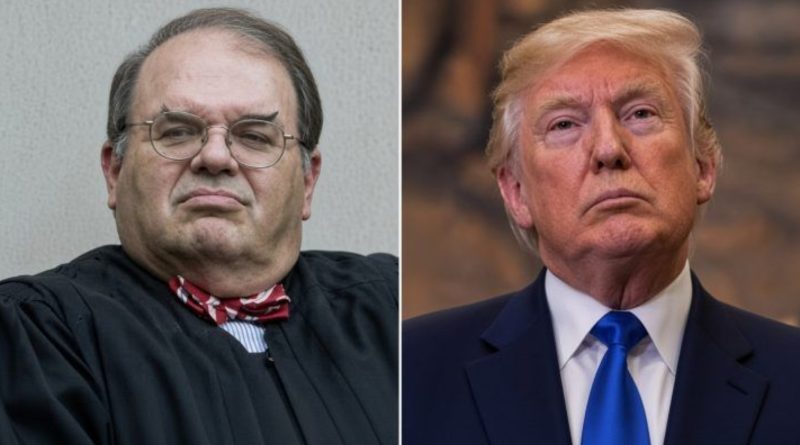
Under these rules, individuals with a history or diagnosis of gender dysphoria, or those who identify as transgender, are largely disqualified from military service unless they obtain a rare waiver. Writing for the majority, Circuit Judge Robert L. Wilkins declared that the policy violates the equal protection guarantees of the Fifth Amendment. He wrote that the administration’s targeting of service members went far beyond any legitimate military readiness concerns, and appeared instead to be “arbitrary and based on animus.”
“The record shows that the purpose of the Hegseth Policy is to target applicants and servicemembers who express what the Administration believes is a ‘false gender identity,’ and the Policy goes far beyond disqualifying persons currently or recently suffering from gender dysphoria,” the majority decision states. “Some of those disqualifications are completely unexplained and have no reasonable justification.”
Legal Arguments and Evidence
The litigation, Talbott v. United States, was brought by active-duty transgender service members and aspiring recruits who argued that the policy arbitrarily strips them of their livelihoods and opportunities to serve based on their identity. The D.C. Circuit’s majority opinion agreed that the administration had failed to provide a rational, evidence-based justification for its sweeping restrictions on those already in uniform. The court noted that transgender troops had been serving openly and successfully for years under previous policies, and the administration had failed to demonstrate that their presence harmed unit cohesion, military readiness, or deployability.
In particularly sharp language, the court noted that the policy’s rapid deployment and aggressive focus on discharges suggested a political motivation rather than a calculated military necessity. By framing transgender identity itself as a “false” expression, the court found, the administration had enacted a policy designed to exclude a specific group without demonstrating how that exclusion would improve the armed forces.
The Department of War has vigorously defended the policy, arguing that it is essential for maintaining strict medical standards, unit cohesion, and deployment readiness. Government lawyers contended that judges should defer to the executive branch and military leadership on who is fit to serve. They argued that military service is not a right, but a privilege, and that the government must have the authority to establish rigorous standards, comparing the policy to exclusions for individuals with chronic medical conditions like diabetes or heart disease.
Administration Response and Dissenting Opinion
Secretary of War Pete Hegseth, a vocal proponent of the ban, has previously criticized “woke” policies in the military and defended the restrictions as necessary to return the armed forces to a singular focus on combat readiness. Following the ruling, Hegseth indicated on social media that the administration would continue to fight, hinting at an appeal to the U.S. Supreme Court.
In a spirited dissent, the panel’s dissenting judge argued that the majority had overstepped its bounds by second-guessing the specialized judgment of military commanders and the executive branch during wartime or high-stakes global tensions. The dissent argued that the court must grant the utmost deference to the President and the Pentagon in matters of national defense. From this perspective, the administration’s concerns about the medical costs, deployment limitations, and unit integration of transgender troops are legitimate policy considerations, even if they are politically contentious.
The dissenting opinion warned that the ruling sets a troubling precedent of judicial intrusion into military affairs. Military service standards are notoriously strict, the dissent noted, pointing out that countless Americans are disqualified every year for various physical, psychological, and medical reasons. Arguing that transgender service should be treated differently, the dissent suggested, undermines the military’s authority to establish its own standards of fitness.
Limited Victory and Next Steps
While transgender advocates celebrated Monday’s ruling as a significant victory, its immediate impact is limited. The decision directly protects the named plaintiffs and current transgender service members from being discharged, but the court’s decision to leave the recruitment ban intact means that the doors remain closed to most new transgender applicants for now. Advocacy groups, including GLAD Law and the National Center for Lesbian Rights (NCLR), praised the court for recognizing the policy as discriminatory. However, they acknowledged that the fight is far from over, as they continue to push for class-action certification that would extend the protections to all transgender personnel and eventually overturn the enlistment ban.
The legal battle now seems destined for the Supreme Court, as the administration is expected to seek a full “en banc” review by the entire D.C. Circuit or appeal directly to the nation’s highest court. For now, thousands of transgender troops already in service have secured a temporary, but vital, shield against discharge, while the military’s future standards of service remain a deeply contested battleground.