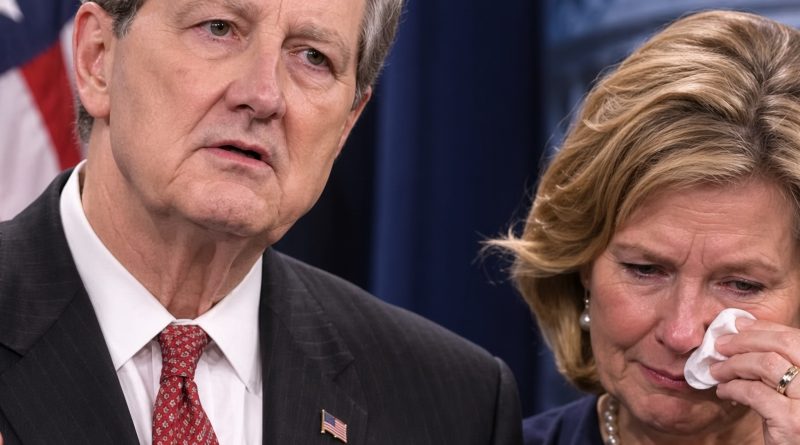
Breaking: 25 MINUTES AGO, ALL EYES TURNED TO U.S. SENATOR JOHN NEELY KENNEDY AND HIS WIFE BECKY KENNEDY AS THEY REPORTEDLY DELIVERED A STUNNING ANNOUNCEMENT AT A LIVE PRESS CONFERENCE — AMERICANS DID NOT SEE THIS COMING!…
The atmosphere inside the crowded Louisiana conference hall was unusually tense as Senator John Neely Kennedy and his wife, Becky Kennedy, prepared to address an audience expecting an important announcement. Reporters gathered beneath bright television lights, exchanging curious glances while cameras focused on two empty chairs positioned behind a long table decorated with microphones and official looking conference materials. For years, Senator Kennedy had become recognizable through his distinctive speaking style, sharp observations, and memorable appearances during congressional hearings and discussions about important issues affecting the United States. Yet this imagined evening promised something different from another political interview, legislative debate, or public disagreement, as the mysterious gathering appeared focused on a deeply personal and unexpected subject.
When the conference doors finally opened, Kennedy entered wearing a dark suit, offering a restrained smile before approaching the microphones while reporters prepared to record his opening statement that evening. Becky Kennedy followed moments later, maintaining a composed expression as she took her seat beside her husband, creating an atmosphere of anticipation throughout the fictional gathering of journalists and guests. The couple exchanged a quiet glance before Kennedy leaned toward the microphone, thanked everyone for attending, and explained that the evening would involve something more meaningful than ordinary political discussion. His opening words immediately surprised reporters who had expected an announcement concerning government policy, an upcoming campaign, or another development involving the senator’s professional responsibilities in Washington and Louisiana.
Instead, Kennedy began reflecting upon the importance of family, community, and the people who provide encouragement during demanding careers that frequently require individuals to spend considerable time away from home. He acknowledged that public service could bring extraordinary responsibilities, but also suggested that meaningful personal relationships deserved attention beyond the demands of political schedules and constant media scrutiny today. Becky listened carefully as her husband continued speaking, occasionally nodding while the fictional audience remained silent, recognizing that the anticipated announcement might involve something more emotional than initially expected. Kennedy explained that people often associated political figures with speeches, disagreements, and legislative responsibilities, but rarely considered the quieter personal experiences that shaped their perspectives outside public office each day.
Community Initiative Announcement
He described the importance of appreciating individuals who offer encouragement without seeking recognition, emphasizing that meaningful support frequently comes through ordinary conversations and consistent acts of understanding and personal kindness. The room grew noticeably quieter as Kennedy acknowledged the emotional challenges associated with balancing demanding professional responsibilities and maintaining meaningful connections with family members throughout different chapters of life together. Then he turned toward Becky, offering a warm smile before thanking her for the companionship and encouragement that had remained important throughout their shared experiences over many years of marriage. The imagined audience responded with gentle applause, but Kennedy raised one hand, explaining that the most significant part of the evening’s announcement had not yet been revealed to everyone.
Becky leaned toward her microphone, thanked the audience for their attention, and explained that the fictional gathering would introduce a community initiative centered on education, family support, and mentorship opportunities. Her statement surprised several reporters who had anticipated a dramatic personal revelation, particularly because the conference had been introduced through mysterious invitations that offered little explanation about its intended purpose. Instead, the imagined announcement described a proposed program designed to connect experienced volunteers with young people seeking educational guidance, encouragement, and practical assistance while planning their futures and careers ahead. Becky explained that the initiative would focus on helping students develop confidence, identify meaningful goals, and recognize opportunities that might otherwise remain difficult to access without reliable guidance or support.
Kennedy nodded in agreement, emphasizing that educational opportunities could influence the direction of someone’s life and that young people deserved encouragement regardless of their financial circumstances or family backgrounds. The fictional audience began applauding as the couple described their imagined vision, recognizing that the announcement involved a constructive community project rather than another sensational development concerning political controversy or personal relationships. However, the most unexpected moment was still approaching, and Becky appeared ready to introduce an element that would transform the atmosphere from curiosity into something considerably more emotional for attendees. She invited several fictional students seated near the front of the conference hall to stand, explaining that their experiences represented the importance of educational opportunity and meaningful community encouragement today.
Student Testimonies and Personal Stories
The young participants appeared surprised as they approached the stage, carrying notebooks and personal statements describing their ambitions, challenges, and hopes for the future beyond their current educational circumstances. One student explained that pursuing higher education had sometimes seemed impossible because financial uncertainty and limited access to guidance made the application process feel overwhelming and difficult to navigate independently. The fictional testimony created a thoughtful silence as journalists considered how many young people might encounter similar challenges while attempting to pursue educational opportunities and meaningful professional ambitions in adulthood. Becky responded with an encouraging smile, explaining that students deserved opportunities to ask questions, receive practical advice, and explore their interests without feeling embarrassed about unfamiliar educational processes or expectations.
Kennedy then offered a supportive handshake, reminding the student that determination and consistent effort could help individuals navigate challenges, particularly when experienced mentors provided reliable information and encouragement along the way. The exchange generated applause throughout the fictional conference hall, creating an emotional moment that contrasted sharply with the dramatic expectations surrounding the senator’s unexpected appearance beside his wife that evening. But another surprise followed when Becky invited the young participants to share their personal aspirations, allowing the imagined audience to hear directly from individuals who might benefit from educational mentorship. One participant expressed interest in becoming a teacher, while another hoped to pursue engineering, demonstrating the variety of professional ambitions that could emerge when students received encouragement and appropriate guidance.
Kennedy listened attentively, occasionally smiling as the students described their goals, before acknowledging that communities benefited when young people felt confident enough to imagine meaningful futures beyond immediate circumstances and limitations. He emphasized that successful mentorship should not involve telling students exactly what careers to pursue, but instead helping them develop the knowledge and confidence necessary to make independent decisions. Becky agreed, suggesting that young people needed supportive environments where their questions were welcomed and their individual strengths recognized rather than constantly compared with the achievements of others around them. The conversation gradually shifted toward the importance of practical educational resources, including career counseling, scholarship information, study skills, and opportunities to connect with experienced professionals from different occupational backgrounds and communities.

Program Implementation and Safeguards
Several reporters began asking questions about how the fictional initiative would operate, whether volunteers would receive appropriate training, and what safeguards would protect participating students and their personal information. Becky explained that any responsible educational program required careful planning, qualified supervision, and clear expectations for everyone involved, particularly when activities included younger participants seeking mentorship and professional guidance. Kennedy added that the imagined initiative would prioritize cooperation with experienced educators and community organizations capable of providing reliable assistance rather than making unrealistic promises about guaranteed educational or professional success. His response appeared to reassure several fictional attendees who appreciated the emphasis on practical implementation, responsible planning, and measurable opportunities rather than relying exclusively upon inspirational speeches or publicity.
The couple continued discussing how mentorship could encourage students to recognize their potential, particularly when personal circumstances made ambitious educational goals seem difficult or impossible to achieve without outside support. Becky emphasized that encouragement did not always require expensive programs, because meaningful assistance could begin with helping someone understand an application process or identify reliable information about available opportunities. Kennedy agreed, explaining that experienced professionals could contribute by sharing practical knowledge, offering constructive feedback, and reminding younger generations that setbacks did not necessarily determine their long term potential. The imagined audience responded warmly, recognizing that the discussion had moved beyond the mystery surrounding the original announcement and toward a broader conversation about education and community responsibility across America.
However, one reporter eventually asked whether the proposed initiative represented a change in Kennedy’s professional priorities or suggested that he might be preparing to step away from political responsibilities. The room immediately became quiet again as Kennedy considered the question, understanding that audiences naturally associated his public appearances with government service and discussions about the future of American politics. He smiled before explaining that the fictional announcement concerned community engagement rather than an imagined decision about retirement, resignation, or any other change in his professional political responsibilities today. Becky reinforced that distinction, emphasizing that the purpose of the gathering was to highlight educational opportunity rather than encourage speculation about their private lives or the senator’s political future.
Resilience, Confidence, and Personal Responsibility
Her response appeared to settle the immediate curiosity, although several reporters continued wondering whether another unexpected revelation might emerge before the anticipated conference reached its conclusion later that evening. Kennedy then shifted the conversation toward the importance of personal responsibility, explaining that educational support should encourage students to develop independence rather than become dependent upon constant outside direction or assistance. He emphasized that confidence often developed through repeated effort, constructive criticism, and the willingness to learn from mistakes rather than expecting every challenge to disappear immediately or without difficulty. Becky added that supportive relationships could help young people navigate uncertainty, particularly when students felt discouraged by setbacks or overwhelmed by decisions concerning education and future professional opportunities in life.
The fictional discussion gradually evolved into a broader reflection on ambition, resilience, and the responsibility communities might share in creating environments where young people could develop their abilities with confidence. Several imagined attendees began applauding again as Kennedy acknowledged that meaningful encouragement required patience and respect for individual circumstances rather than assuming that every student faced identical challenges or opportunities. He explained that each young person possessed different interests, strengths, and personal experiences, making individualized guidance more valuable than imposing a single definition of success upon everyone seeking assistance or support. Becky then shared an imagined reflection about the importance of listening carefully when young people described their concerns, emphasizing that understanding should come before offering advice or making assumptions about their needs.
Her message resonated throughout the conference hall, prompting thoughtful reactions from the fictional audience as participants considered the emotional challenges associated with educational uncertainty and important personal decisions during adolescence. Kennedy thanked Becky for helping communicate the initiative’s broader purpose, emphasizing that meaningful community programs required collaboration, clear responsibilities, and a shared commitment to supporting the individuals they intended to serve. The couple exchanged appreciative smiles before returning their attention to the students, who remained visibly excited about the possibility of receiving encouragement from experienced educators and community volunteers in the future. Then came the most unexpected moment of the fictional evening, when Becky stepped away from the microphone and invited one young participant to address the audience directly from the stage.
Emotional Impact and Program Value
The student hesitated before accepting, explaining that encouragement from a trusted teacher had helped transform uncertainty into a stronger sense of direction and renewed confidence about pursuing educational goals. The room fell silent as the participant described the importance of having someone recognize potential, particularly when financial challenges and unfamiliar academic requirements made future opportunities appear increasingly distant or unattainable. Kennedy listened without interrupting, allowing the student to finish before offering a supportive handshake that prompted another enthusiastic round of applause from the fictional audience gathered inside the conference hall. Becky appeared moved by the exchange, thanking the participant for speaking openly and reminding everyone that genuine encouragement could begin with something as simple as listening carefully to another person’s concerns.
The emotional atmosphere intensified as several attendees stood, recognizing that the fictional announcement had transformed into a celebration of educational possibility rather than another sensational political controversy or personal revelation. Kennedy returned to the microphone and acknowledged that the imagined project would require careful organization, responsible partnerships, and sustained effort before meaningful opportunities could become available to participating students across communities. He emphasized that announcements alone could not change someone’s circumstances, because meaningful progress depended upon practical resources, qualified volunteers, and consistent commitment from everyone involved in developing the proposed initiative. Becky reinforced that message, explaining that the fictional program’s ultimate value would be measured through the experiences and personal development of participants rather than publicity surrounding its initial announcement to reporters.
Her words prompted another thoughtful response from journalists, who began asking questions about educational standards, participant wellbeing, and the importance of maintaining realistic expectations throughout the proposed mentorship process ahead. The imagined discussion demonstrated that public interest could extend beyond political personalities when announcements addressed meaningful subjects involving education, opportunity, and the future of younger generations within American communities today. As the fictional conference approached its conclusion, Kennedy thanked the journalists for listening and expressed appreciation for the students who had shared their experiences with courage and openness before everyone. He reminded the audience that public recognition could create opportunities for positive influence, but meaningful contributions required humility and an understanding that other people’s aspirations deserved genuine respect and consideration.
Becky offered a final message about believing in individual potential, encouraging students to recognize that their educational journeys did not need to follow anyone else’s expectations or predetermined professional timeline. The audience applauded as both speakers stood together, acknowledging the participants and inviting them to join a final group photograph beneath the bright lights of the imagined conference stage. For a moment, the fictional room appeared united by a simple idea: educational potential deserved encouragement regardless of financial background, social connections, or the obstacles individuals encountered throughout their lives. The atmosphere contrasted sharply with the uncertainty surrounding the event’s beginning, when reporters had expected a mysterious political announcement or another dramatic revelation involving the senator and his wife.
Instead, the imagined conference delivered a message about mentorship, responsibility, and the importance of helping younger generations develop confidence in their abilities while pursuing meaningful educational and professional ambitions ahead. Kennedy and Becky exchanged another appreciative glance before preparing to leave, but a final reporter raised one question that briefly returned the room to its earlier atmosphere of anticipation. The journalist asked whether they believed their imagined initiative could eventually become more meaningful than the public attention generated by traditional political speeches or major announcements concerning government affairs. Kennedy considered the question before responding that professional responsibilities and community contributions did not need to compete, because both could represent important aspects of someone’s commitment to public service.
Becky added that success could be measured through many different experiences, including the satisfaction of knowing that encouragement had helped another person recognize possibilities they might otherwise have overlooked. Their responses brought the fictional conference to a thoughtful conclusion, leaving the audience with a message about purpose, opportunity, and the influence experienced individuals could have beyond their professional accomplishments. As the cameras stopped recording, the imagined students remained together, discussing their aspirations and reflecting upon the unexpected invitation to participate in an event centered upon their educational futures. The fictional announcement had not involved an invented tragedy, an unverified personal crisis, or a sensational revelation about the private lives of John Neely Kennedy and Becky Kennedy.
Instead, it presented an imagined community initiative focused on helping students develop practical skills, confidence, and a stronger understanding of the opportunities available throughout different stages of their lives. For those familiar with Senator Kennedy, the fictional scenario offered an opportunity to consider how public figures might encourage younger generations through mentorship while continuing to fulfill their professional responsibilities. The imagined presence of Becky Kennedy added another perspective, emphasizing the value of supportive collaboration and thoughtful communication when discussing opportunities for young people navigating unfamiliar educational and professional environments. Together, their fictional appearance illustrated how a mysterious public announcement could become a constructive conversation about education, personal development, and the importance of creating opportunities for emerging generations across communities.
The story also highlighted the difference between public curiosity and meaningful impact, suggesting that the most memorable announcements sometimes involve ideas that extend beyond the individuals delivering them to audiences. For the imagined students, the evening represented something particularly significant: the possibility that experienced adults might recognize their aspirations and help them navigate unfamiliar challenges with greater confidence and preparation. And for the fictional audience, the unexpected announcement became a reminder that personal achievement could inspire wider contributions when accompanied by empathy, responsibility, and a genuine willingness to support others. As Kennedy and Becky departed the stage, the conference hall gradually emptied, leaving behind the memory of an imagined evening defined by encouragement rather than sensational personal speculation or controversy.
One question remained for readers considering the fictional announcement: could a mentorship initiative supported by experienced community leaders help transform educational opportunities available to young people across different American communities? The answer would depend upon practical action, responsible organization, and sustained commitment, but the imagined conference offered a hopeful illustration of how such conversations might begin through meaningful collaboration. Ultimately, the fictional story reminds audiences that the greatest surprise does not always involve shocking personal news, because an unexpected commitment to helping others can carry equally powerful emotional significance. For those who admire Senator Kennedy, the imagined event explores the possibility of a public figure using professional experience to encourage future generations while maintaining existing responsibilities and commitments.
For readers interested in Becky Kennedy, the fictional scenario highlights supportive collaboration without making unsupported claims about her private life, actual professional plans, or involvement in any real initiative. And for students everywhere, its central message remains straightforward: meaningful potential deserves opportunities to develop, and encouragement can sometimes make the difference between abandoning a dream and pursuing it. The imagined press conference therefore concludes not with a dramatic personal revelation, but with a question about what audiences truly value when recognizable public figures make unexpected announcements before reporters. Would you support an educational mentorship initiative associated with John Neely Kennedy and Becky Kennedy if such a program were ever genuinely proposed and responsibly developed for participating communities?
And if a fictional collaboration could inspire students to pursue their ambitions, would that become an announcement worth celebrating beyond the excitement surrounding ordinary political headlines and public speculation? The fictional evening leaves that decision to the audience, offering a reminder that meaningful stories can celebrate compassion, education, and opportunity without relying upon fabricated personal tragedies or misleading allegations. ❤️ Do you believe education and mentorship can change young people’s lives? Share your thoughts in the comments!