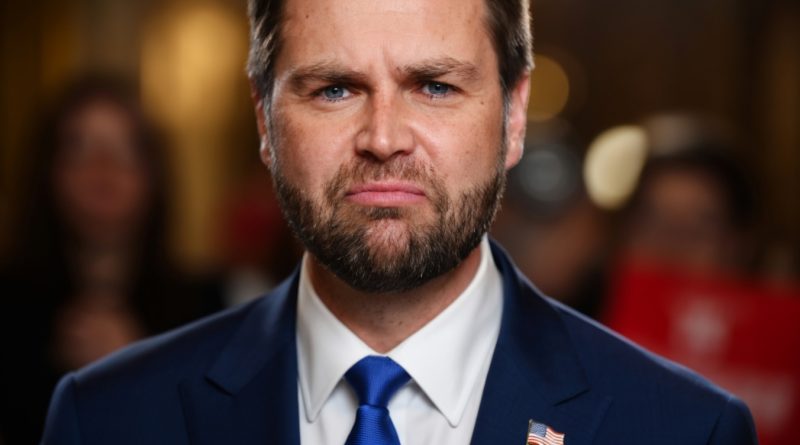
SAD NEWS : Vance Leaves Pakistan With Final Offer From Iran
Vice President J.D. Vance said Sunday that high-level negotiations between the United States and Iran ended without an agreement after Iranian officials declined to accept U.S. terms. Speaking at a press conference from the Serena Hotel Islamabad, Vance described the roughly 21-hour talks as “substantive” but ultimately unsuccessful.
“Iran has chosen not to accept our terms,” Vance said, noting that the U.S. delegation would return home without a deal. “The bad news is that we have not reached an agreement. And I think that’s bad news for Iran much more than it’s bad news for the United States of America.”
Vance emphasized that while discussions were extensive, the United States was unwilling to compromise on key “red lines.” He said negotiators clearly outlined what concessions were possible and where the U.S. position would not change.
“So we go back to the United States having not come to an agreement,” Vance explained. “We’ve made very clear what our red lines are, what things we’re willing to accommodate them on, and what things we’re not willing to accommodate them on. They have chosen not to accept our terms.”
Vance also revealed he remained in frequent contact with Donald Trump throughout the negotiations. “I don’t know how many times we talked to him — a half dozen times, a dozen times over the past 21 hours,” he said in remarks reported by Fox News.
The vice president added that the negotiating team included special envoy Steve Witkoff and Trump’s son-in-law Jared Kushner, and that they were also coordinating with Secretary of State Marco Rubio and Secretary of War Pete Hegseth.
“We were constantly in communication with the team because we were negotiating in good faith,” Vance said. “We leave here with a very simple proposal — our final and best offer. We’ll see if the Iranians accept it.”
Vance arrived in Pakistan early Saturday to lead negotiations aimed at preserving a fragile ceasefire announced earlier in the week and preventing a broader regional conflict. Iran’s delegation included Foreign Minister Abbas Araghchi and Parliament Speaker Mohammad Bagher Ghalibaf.
Although Vance did not disclose specific terms rejected by Iran, he said the core U.S. objective was securing firm assurances that Iran would not pursue nuclear weapons capability.
“The simple fact is that we need to see an affirmative commitment that they will not seek a nuclear weapon, and they will not seek the tools that would enable them to quickly achieve a nuclear weapon,” Vance said. “That is the core goal of the president of the United States.”
Meanwhile, Trump sharpened his rhetoric during the negotiations, arguing that Iran was negotiating from a weakened position. In a post on Truth Social, he wrote that Iranian leaders were attempting to leverage international shipping routes despite significant military losses.
“The Iranians don’t seem to realize they have no cards, other than a short-term extortion of the world by using international waterways,” Trump wrote. “The only reason they are alive today is to negotiate.”
Trump further claimed that Iran’s naval and air capabilities had been severely degraded, stating that its missile and drone infrastructure had been “largely obliterated,” and suggesting the country’s leadership structure had also been significantly disrupted.